Septic System Health
Jump to:

Septic Secrets
There are 2 secrets to septic health and minimizing lake pollution: Bacteria & Time
-
Never let anything go down the drain that kills the good bacteria in your system, such as:
Bleach (non-chlorine bleach is ok)
Anti-Bacterial Products – ban them from your house and cottage
Dishwasher Detergent containing bleach (most brands do contain bleach)
It takes only ONE load of dishes using a regular detergent to kill ALL the good bacteria in your system for up to 70 hours – instead,use septic friendly products available local retailers (look for a statement on the front of the package stating no bleach & no phosphates)
Dishwasher Rinse Aids (use lemon juice instead)
Cream Cleansers (most have bleach)
Drain Cleaners (use Eco Ethic Septic Treatment instead)
Automatic Toilet Bowl Cleaners (blue is not "green")
If soap, toilet paper or grease (bacon & eggs anyone?) get down your drain or anyone in the house is on antibiotics, use Eco Ethic Septic Treatment once a month to provide your system with the correct bacteria and enzymes to digest these items
If your system is sometimes not used for months at a time; when you arrive back the 1st thing you should do is flush 2 cups of Eco Ethic Septic Treatment down your drain to kick start your system
Never use a garburator
-
Your system needs as much time as you can give it to digest the waste you put in before the next load of water arrives.
Remember: one drop in = one drop out of your system. Give your system time by minimizing water use and spreading it out over time.Cut your household water use by 27% by installing a Water Matrix Proficiency, 3 litre flush toilet. These toilets are tested and recommended by the C.H.A. and are available at local TimberMarts.
Try not to do any more than 1 load of laundry per day
Keep showers short and use a low flow shower head
Use every opportunity to use less water when doing regular activities
Get a licensed septic pumper to pump out and inspect both sides of your tank every 2-3 years.
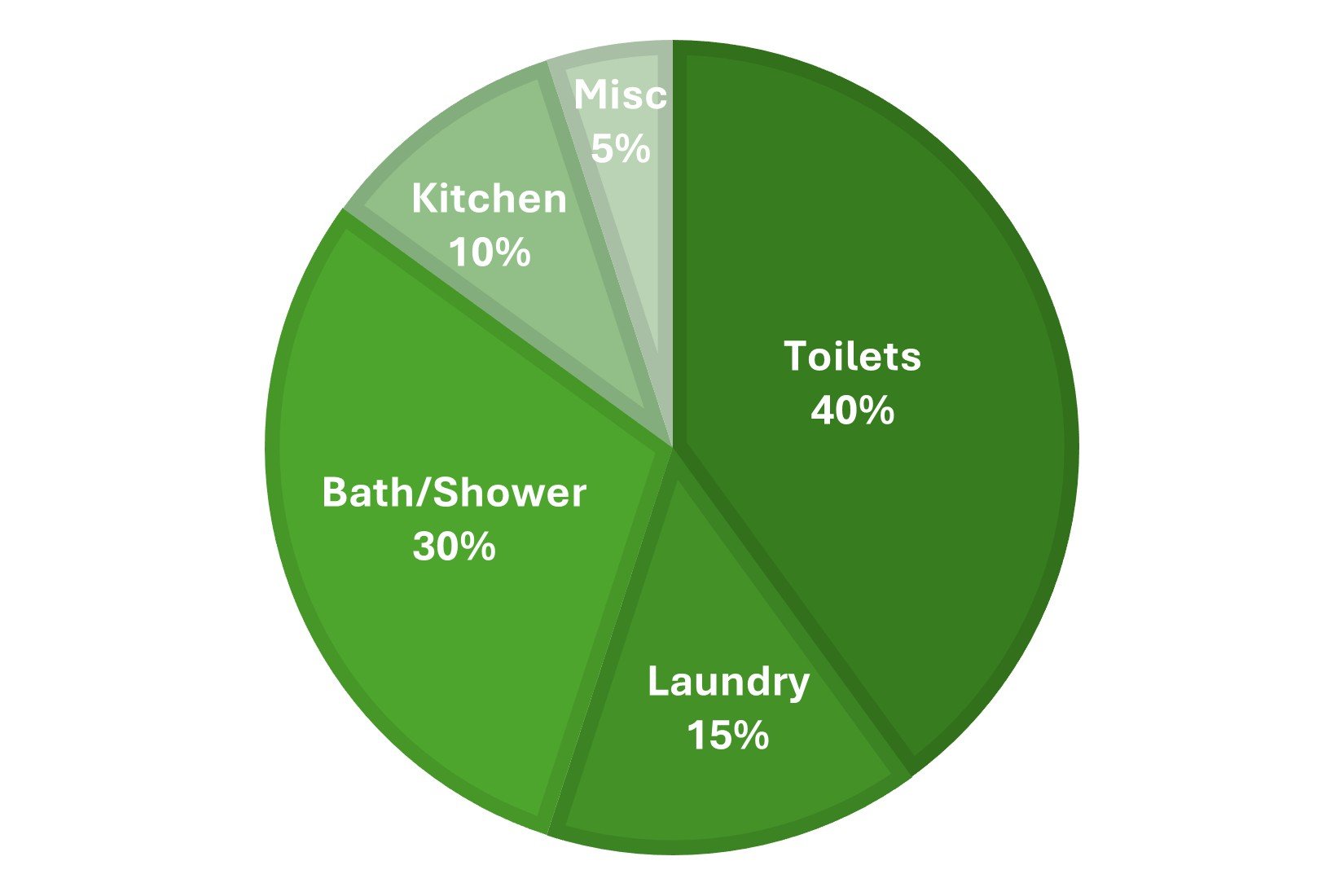
Home Waste Percentages
How Septic Tanks Work
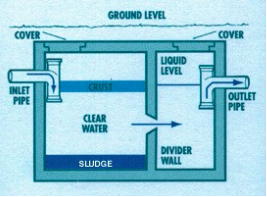
Your septic system is actually a small, on-site sewage treatment and disposal system buried in the ground. The system comprises two parts: The septic tank and the soil absorption area.
The modern septic tank is a watertight box divided into two compartments and usually made of pre-cast concrete, concrete blocks or plastic. When household waste drains into the box, several things take place.
Organic solid material floats to the surface and forms a layer called the "crust". Bacteria in the septic tank biologically convert this material to liquid.
Inorganic or inert solid materials and the by-products of the bacterial digestion sink to the bottom of the tank and form a layer called "sludge".
Only fairly clear water should exist between the crust and sludge layers. This clear water -and only this clear water should overflow into the second compartment and then out to the soil absorption area.
Bacteria
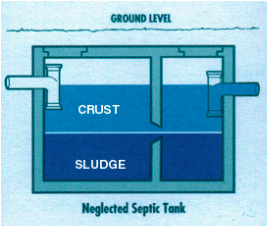
Working septic tank bacteria must be present in the septic tank to digest the organic solids. Normal household waste provides enough bacteria to keep the digestive process working properly. A faulty system is the result of solid material overflowing into the second compartment. It is the solids overflow that clogs soil pores and causes septic systems to fail.
Two main factors cause solid material to build up to the point of overflow:
Bacterial Deficiency
Lack of Pumping
Septic System Soil Absorption
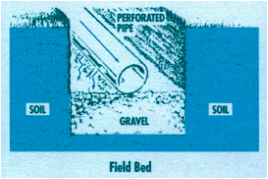
Area septic field beds generally consist of a network of perforated pipes running through layers of sand and crushed stone. They may be constructed above or below ground. If solids are allowed to clog the pipe perforations or the sand, drainage will begin to slow and eventually stop.